Airframe
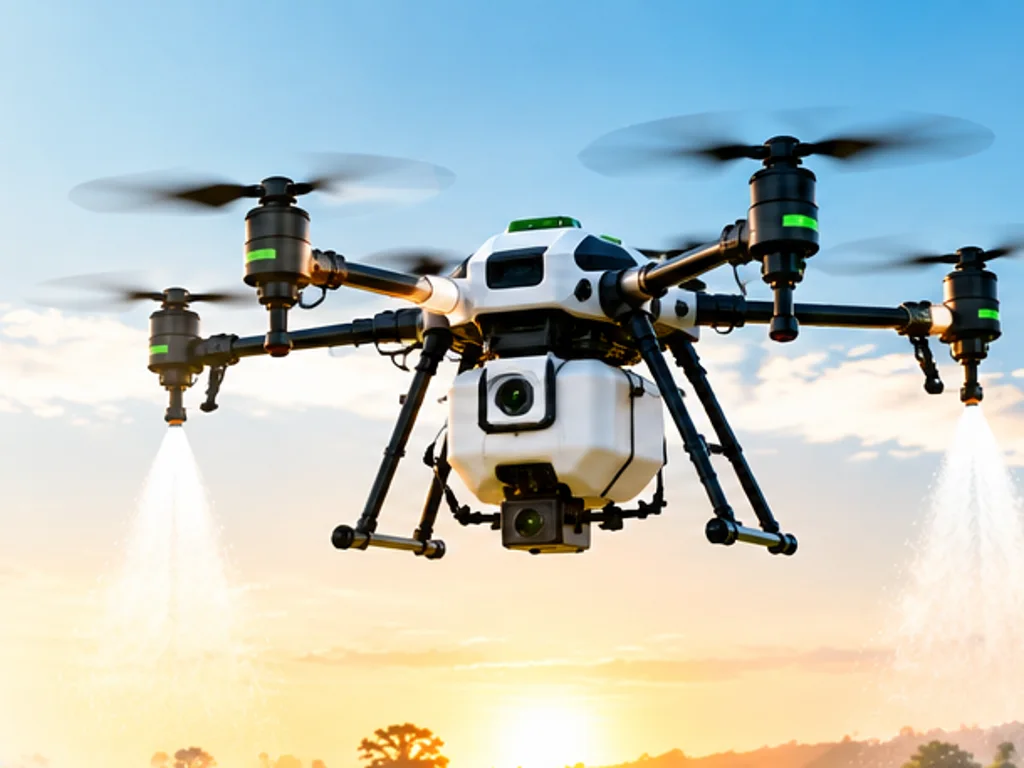
Usually carbon-fibre or aluminium arms with a central body. Foldable arms make transport easier. The frame also carries the tank and landing gear.
Motors, ESCs and propellers
Brushless DC motors spin large propellers. Electronic Speed Controllers (ESCs) translate flight-controller commands into motor speed. Bigger tanks need more powerful motors and larger propellers.
Flight controller & sensors
The "brain" uses an IMU (gyroscope + accelerometer), barometer and compass to keep the drone stable and follow its route.
GNSS and RTK
Satellite positioning lets the drone follow planned routes. RTK (Real-Time Kinematic) correction improves accuracy from metres to centimetres, which reduces overlap errors on spraying lines.
Radar & obstacle sensing
Terrain-following radar keeps a constant height above the crop. Obstacle sensors help avoid trees, poles and wires.
Spray system
Tank, pump, flow meter and nozzles (pressure or centrifugal). Centrifugal nozzles let you adjust droplet size; pressure nozzles are simple and robust. Calibration ensures the right litres per acre.
Battery & power
High-discharge lithium batteries power everything. Agricultural drones typically use several batteries per day with a fast charger or generator in the field.
Remote controller & app
The pilot plans missions, monitors telemetry and takes manual control when needed.